Doctor
AI diagnostic systems are entering clinical workflows faster than most physicians realize.
Take the assessment →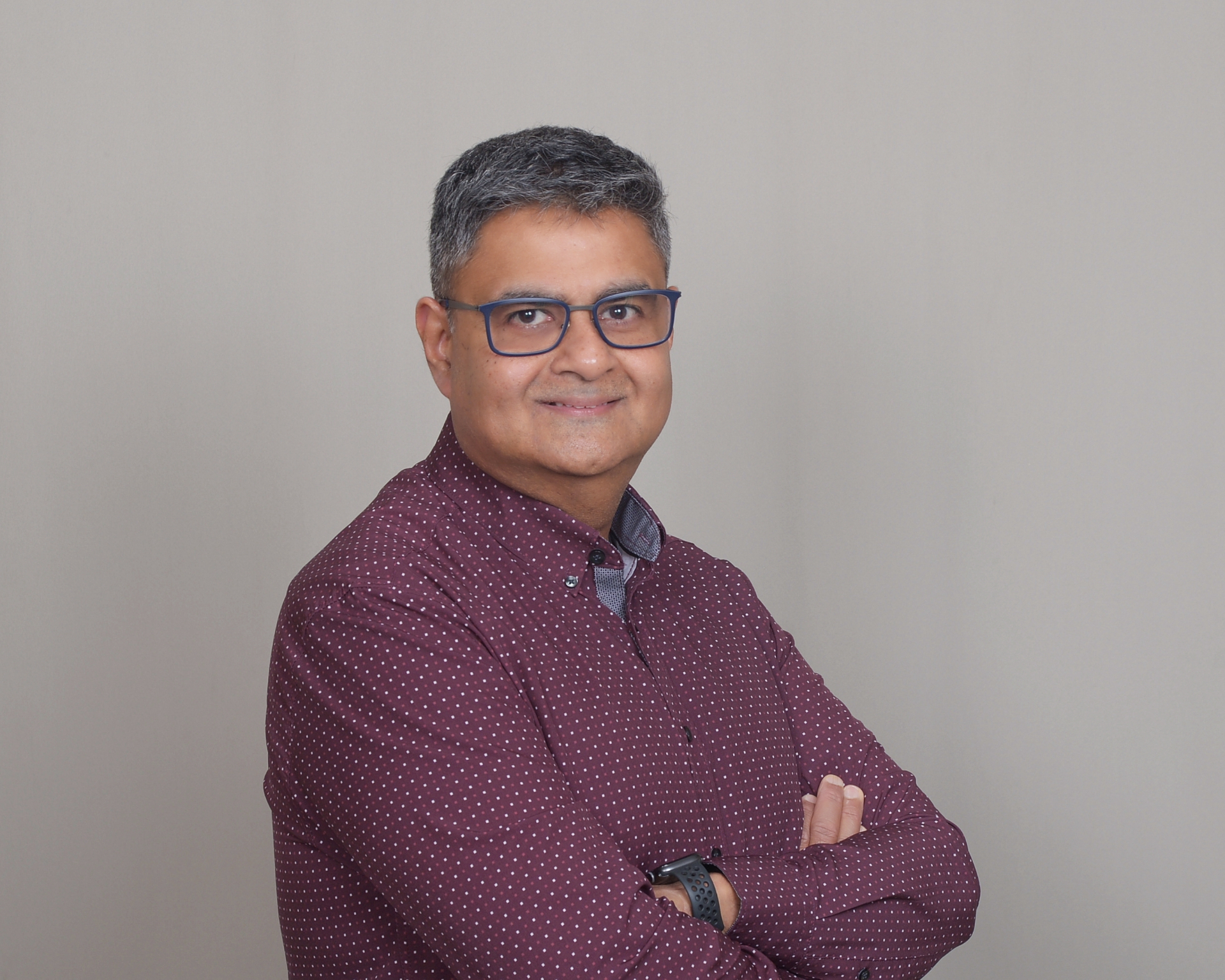
Dilip Chetan
I evaluate AI's impact through a distinctive combination of computer science, human factors, and business economics.
The Degrees
I hold a Master's in Computer Science, a Master's in Human Factors, and an MBA. Most people have heard of the other two. Human Factors is the one that usually requires an explanation. Human Factors is the science of how humans actually interact with systems — not how engineers intend them to interact, but what really happens when you put a real person in front of a real tool under real conditions. It studies cognitive patterns, decision-making under uncertainty, how people behave when they're stressed or operating at the edge of their competence. It's the discipline behind cockpit design, hospital equipment, nuclear plant interfaces. It turns out to be exactly the right lens for AI disruption. Because the question of where AI can and can't replace you is not purely a technical question. It's a question about how humans think, what they're genuinely wired for, and where the boundary lies between what a machine can simulate and what only a person can do. The Computer Science degree tells me what AI can actually do. The Human Factors degree tells me what it can't. The MBA tells me what the market will actually pay for. Together, they let me see something most people writing about this topic miss.
The Inside View
At Google, I led AI strategy for Gemini and DeepMind — directing programs that moved workloads to on-device AI execution at a scale that will reshape how software is built and deployed. At Meta, I worked directly on the ranking systems and generative AI tools that now reach billions of people daily. I drove the strategic introduction of generative AI into creator tools. I designed the evaluation frameworks that determined how these systems actually perform in the real world. I was not a spectator. I was in the rooms where the decisions were made. That direct experience is what grounds every assessment I build. The Doctor assessment draws on direct knowledge of how AI diagnostic systems are being integrated into clinical workflows — not vendor claims, but how the technology is actually deployed. The Software Engineer assessment reflects hands-on work with the ML infrastructure — JAX, PyTorch, TPU systems — that now underlies the tools competing with developers' work. The Finance Professional assessment comes from years at Intuit and Bill.com, inside the fintech platforms AI is transforming from within. The Sales Professional and Product Manager assessments reflect direct work at Salesforce, where I contributed to $100M+ enterprise deals, and at Meta and Google, where I watched AI reshape both roles in real time. These are not assessments built from trend reports. They are built from what I personally witnessed.
Small Businesses
I understand small businesses from the ground up — not as an analyst looking in, but as an owner, a researcher, and someone who spent years in the data with them. My wife and I have run a preschool since 2011. I know what it means for every dollar to matter, for the business to be inseparable from your name and your household. At Intuit, I worked on QuickBooks Online and identified an entirely new category of accountant the company was failing to serve — younger, tech-native, less attached to desktop workflows. At Bill.com, as a member of the executive team during the company's path to IPO, I surveyed tens of thousands of small businesses across the United States and conducted deep research with hundreds of them directly — boutique fashion designers, gym owners, martial arts studios, bakeries, restaurants, distillers, content writers, graphic designers, marketing agencies, educators. At Gusto I developed a working understanding of the payroll and HR systems that form the operational backbone of small business survival. I am also a solopreneur. I know what it costs to bootstrap something from nothing while the bills don't stop.
The AI threat these businesses face is real and already measurable. A 2025 survey found that 1 in 4 business owners lost clients in the past year specifically because customers used an AI tool instead of paying for their service. The businesses most exposed are the ones whose core value proposition was "I can produce this thing quickly and well" — and AI just got very good at that thing.
The Work
I build role-specific AI risk assessments at Defensible Zone™. I coach professionals, executives, and small businesses. I speak to organizations navigating AI disruption. And I advise founders and investors on which products have durable competitive moats as AI reshapes their markets. In 2017 I co-authored Ignite Your Research Mojo — a methodology for using customer insights to build better products. It's still on Amazon. It reflects something that has always driven my work: the belief that the best decisions come from actually understanding people, not assuming you do.
The Assessments
AI diagnostic systems are entering clinical workflows faster than most physicians realize.
Take the assessment →Code generation tools now produce work that competes directly with mid-level engineers.
Take the assessment →Fintech platforms are automating the analysis and reconciliation work that once defined the role.
Take the assessment →AI is taking over prospecting, qualification, and the early stages of enterprise deal cycles.
Take the assessment →Generative tools are absorbing research synthesis, spec writing, and roadmap analysis.
Take the assessment →AI design tools are producing flows, wireframes, and copy that close the gap on junior work.
Take the assessment →